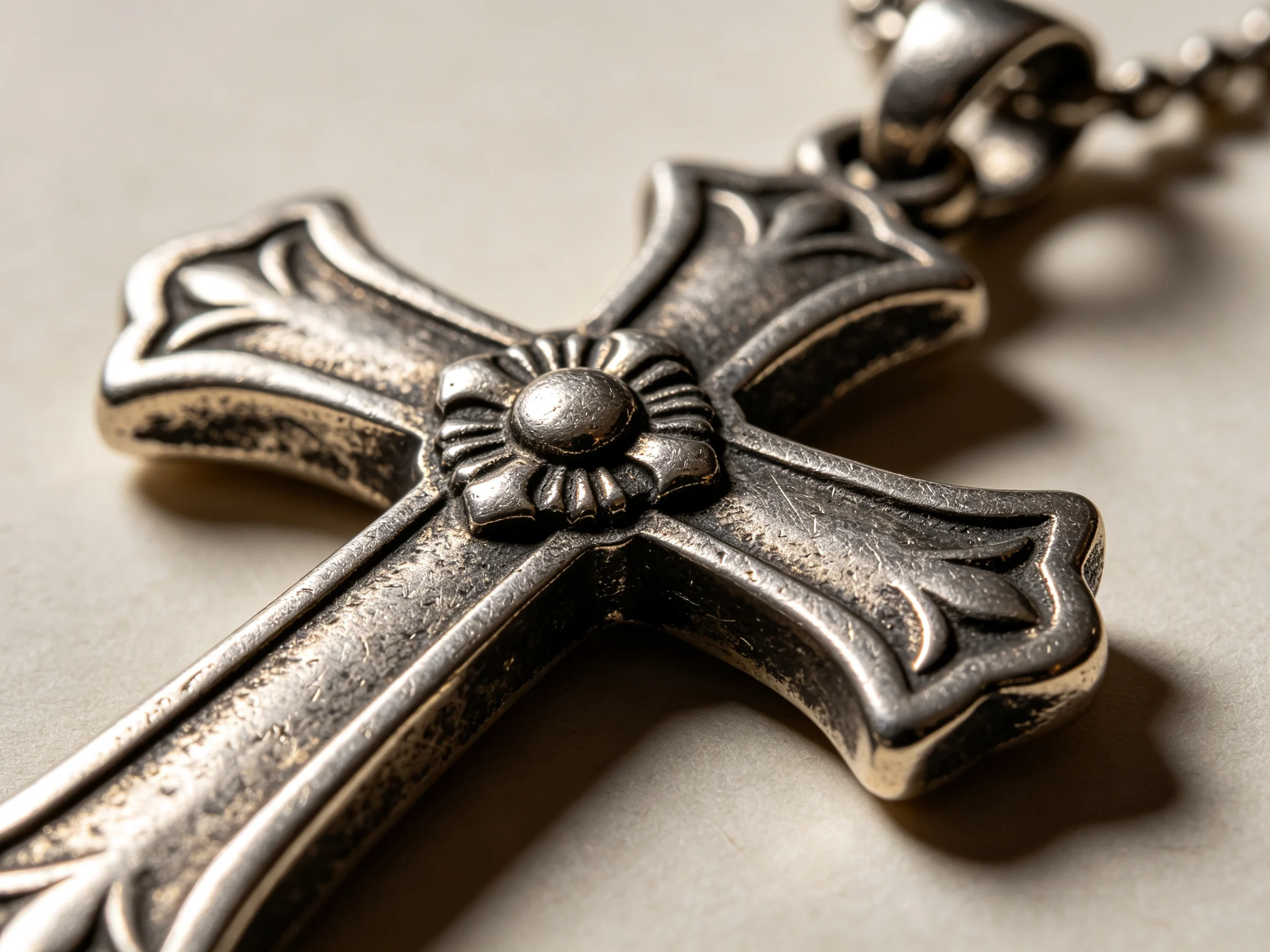
Religious jewelry works best when personal meaning is supported by comfortable proportions and clearly disclosed materials.
The design range extends from cross pendants to heritage motifs. That range allows personal choice, but it also creates very different care and comfort requirements.
Use the sections below to compare materials, proportions, comfort, symbolic context, and seller transparency before making a decision.
Defining the Style Before You Buy
The term religious jewelry can cover more than a single product type. It includes designs such as cross pendants, medal necklaces, symbolic rings, prayer bracelets, and heritage motifs and may range from private devotional pieces to visible fashion jewelry.
The category includes both fashion jewelry and long-term keepsakes. The difference is usually found in material disclosure, finishing, repairability, and the precision of small components.
Faith, Memory, and Personal Intention
The cross has a public religious identity, yet jewelry is worn in a personal space. For that reason, belief, devotion, remembrance, community, protection, and personal reflection may overlap without being identical for every wearer.
When buying for another person, ask what the symbol means to them instead of assigning a message on their behalf. Respect is more important than choosing the most elaborate design.
How to Shortlist the Right Piece
Compare symbol accuracy, recipient tradition, material quality, occasion, and respectful presentation before deciding. These details predict satisfaction more reliably than trend language.
The final choice should work with the wearer’s ordinary clothes, movement, and care habits. Meaning is easier to preserve when the piece is comfortable enough to use.
Common Styles and What They Change
Each version creates a different balance between symbolism and styling:
- Cross Pendants: Look at the practical construction rather than judging only the front-facing photograph.
- Medal Necklaces: Look at the practical construction rather than judging only the front-facing photograph.
- Symbolic Rings: Look at the practical construction rather than judging only the front-facing photograph.
- Prayer Bracelets: Look at the practical construction rather than judging only the front-facing photograph.
- Heritage Motifs: Look at the practical construction rather than judging only the front-facing photograph.
If the wearer is new to jewelry, a moderate version is usually easier to adopt than an extreme statement piece.
How to Judge Proportion Before Ordering
A piece can be visually beautiful and still fail because it twists, catches, pinches, or sits at the wrong height. Check the physical details before choosing.
- Symbol Accuracy: Compare this with a piece the wearer already finds comfortable.
- Recipient Tradition: Compare this with a piece the wearer already finds comfortable.
- Material Quality: Compare this with a piece the wearer already finds comfortable.
- Occasion: Compare this with a piece the wearer already finds comfortable.
- Respectful Presentation: Compare this with a piece the wearer already finds comfortable.
A few minutes spent comparing measurements can prevent most returns caused by scale and comfort.
Materials, Finishes, and What They Mean for Wear
A good material choice is not always the most expensive one. It is the option whose maintenance and durability match the wearer’s habits.
- Stainless Steel: Look for a specific composition instead of a vague color or “premium” label.
- Silver: Look for a specific composition instead of a vague color or “premium” label.
- Gold: Look for a specific composition instead of a vague color or “premium” label.
- Wood: Look for a specific composition instead of a vague color or “premium” label.
- Stone And Enamel Details: Look for a specific composition instead of a vague color or “premium” label.
Solid, plated, filled, vermeil, stainless steel, sterling silver, and natural wood are not interchangeable descriptions. Each should be stated plainly.
When the Piece Becomes Part of a Routine
Daily wear is a practical test. The piece must remain comfortable around desks, bags, clothing, exercise, travel, and changing weather.
Low-maintenance does not mean indestructible. Clasps, plating, stones, cords, and wood may have different limits even when the main metal is durable.
How to Wear the Piece Naturally
The simplest styling rule is to decide whether the piece is the focal point or a quiet supporting detail.
- Private Daily Wear: Match chain, scale, or finish to the texture and formality of the clothing.
- Visible Faith Expression: Match chain, scale, or finish to the texture and formality of the clothing.
- Milestone Gifts: Match chain, scale, or finish to the texture and formality of the clothing.
- Family Keepsakes: Match chain, scale, or finish to the texture and formality of the clothing.
- Minimal Modern Jewelry: Match chain, scale, or finish to the texture and formality of the clothing.
Mixed metals can work when both tones are repeated deliberately. Randomly adding a single conflicting finish is more likely to look accidental.
Is It a Good Gift?
A symbolic gift should begin with the recipient rather than the occasion. Notice what they wear repeatedly, what metals they avoid, and whether they prefer private or visible expressions of faith.
Check metal tone, size, skin sensitivity, daily activity, and care preferences before ordering. A short note can explain why you chose the piece without telling the recipient what it must mean.
Use the CrossMira story and design philosophy to compare measurements, materials, and the overall design direction before choosing.
Maintenance That Preserves the Piece
- Take the piece off before swimming, showering, strenuous exercise, or household cleaning.
- Blot moisture rather than rubbing delicate finishes aggressively.
- Keep silver polishing products away from stones, plating, and intentionally dark details unless approved.
- Separate chains so they cannot knot around rings or earrings.
- Seek repair when a stone moves or a closure no longer feels reliable.
The safest method is determined by the most delicate component. A strong chain does not make a glued stone, plated pendant, wooden inlay, or leather cord equally water resistant.
Details Worth Inspecting Closely
- Front and back views: The reverse and attachment points should be visible, not only the polished front.
- Consistent specifications: Material and measurements should agree across title, description, and variation options.
- Balanced proportion: Chain, pendant, band, or earring findings should look structurally compatible.
- Realistic claims: Durability and water resistance should be explained with limits.
- Support after purchase: Return, repair, and contact information should be accessible.
Original photographs and clear return terms make comparison easier because they reveal scale and show whether the seller stands behind the description.
Common Buying and Wearing Errors
- Skipping measurements: The word “medium” does not guarantee a familiar size.
- Choosing for the occasion only: A gift still needs to work after the celebration ends.
- Assuming all crosses mean the same thing: Form and tradition can change context.
- Leaving pieces wet: Moisture and residue can collect around links, settings, and cords.
- Storing everything together: Chains, stones, and hard metal edges can scratch one another.
Frequently Asked Questions
What should I check before buying religious jewelry?
Check symbol accuracy, recipient tradition, and material quality, exact material disclosure, measurements, construction photographs, care guidance, and return terms.
Can religious jewelry be worn every day?
Religious jewelry can suit daily wear when the piece is comfortable, secure, and made for the wearer’s routine. Delicate finishes still need reasonable removal and care.
Is religious jewelry a meaningful gift?
Yes. It can express belief, devotion, remembrance, community, protection, and personal reflection. Choose according to the recipient’s own beliefs, style, size, and willingness to care for the material.
How should religious jewelry be stored?
Keep it dry and separate from harder pieces. Untangle chains, use padded ring slots, secure earring pairs, and protect wood, plating, and stones from friction.
How can I recognize good-quality religious jewelry?
Look for named materials, consistent measurements, smooth finishing, reliable closures, secure stones or cords, realistic durability claims, and accessible customer support.
Choose for the Person Who Will Wear It
The best religious jewelry is not automatically the most expensive, largest, or most decorative option. It is the piece that balances symbolism with construction and comfort.
The symbol already carries emotional weight. Good design lets that meaning remain visible without making the piece uncomfortable or difficult to maintain.