Orthodox cross jewelry may carry faith, memory, identity, or affection, but the piece still has to survive real outfits, movement, storage, and care.
This topic includes three-bar crosses, Byzantine-inspired crosses, engraved pendants, icon-detail medallions, and simple traditional crosses. Depending on the wearer, those forms can communicate Christian faith within Eastern Orthodox traditions, with design details that may carry liturgical and cultural significance.
Rather than treating the cross as a trend label, this guide examines tradition-specific form, inscriptions, recipient background, symbol accuracy, and seller description so the final choice feels intentional in ordinary life.
Understanding Orthodox cross jewelry
Orthodox cross jewelry describes pieces in which the cross is the main pendant, shape, engraving, or structural detail. It may appear as three-bar crosses, Byzantine-inspired crosses, engraved pendants, icon-detail medallions, and simple traditional crosses.
A useful listing should identify the base material, finish, dimensions, closure, weight, and care limits. Color alone does not reveal how the piece is constructed.
Where the Symbol Comes From
Orthodox cross forms vary across regions. A familiar Slavic form has three horizontal bars, including a slanted lower bar, but not every Orthodox cross uses the same structure.
Modern versions may change proportion, ornament, or materials. Those changes do not automatically make a piece disrespectful, but buyers should know whether they are purchasing a traditional form or a contemporary adaptation.
Meaning Depends on the Wearer
People may choose this piece for Christian faith within Eastern Orthodox traditions, with design details that may carry liturgical and cultural significance. A gift, family history, milestone, or difficult season can add meaning that is not visible from the design alone.
Meaning also affects styling. Some people prefer a quiet piece close to the body, while others want a visible reminder that becomes part of their public identity.
How to Choose the Symbol Respectfully
Look for descriptions that acknowledge variation rather than claiming one universal meaning. Careful language is usually a better sign than exaggerated certainty.
A contemporary adaptation can still be meaningful when it is described honestly. The problem is not modern design; it is misleading historical or spiritual claims.
The Main Design Choices
Each version creates a different balance between symbolism and styling:
- Three-Bar Crosses: Check scale, attachment points, and whether the design remains comfortable during movement.
- Byzantine-Inspired Crosses: Check scale, attachment points, and whether the design remains comfortable during movement.
- Engraved Pendants: Check scale, attachment points, and whether the design remains comfortable during movement.
- Icon-Detail Medallions: Check scale, attachment points, and whether the design remains comfortable during movement.
- Simple Traditional Crosses: Check scale, attachment points, and whether the design remains comfortable during movement.
A balanced design still reads clearly without relying on excessive size, stones, or ornament.
Fit, Scale, and Physical Comfort
Fit includes more than chain length or ring size. Weight, edge shape, clasp placement, movement, and contact with clothing all affect whether a piece is worn often.
- Tradition-Specific Form: Consider how this behaves after several hours, not only when first tried on.
- Inscriptions: Consider how this behaves after several hours, not only when first tried on.
- Recipient Background: Consider how this behaves after several hours, not only when first tried on.
- Symbol Accuracy: Consider how this behaves after several hours, not only when first tried on.
- Seller Description: Consider how this behaves after several hours, not only when first tried on.
Gift buyers should favor adjustability whenever the product type allows it.
Choosing a Material That Fits the Routine
The base material matters more than the marketing name. It determines how the piece responds to sweat, water, friction, and polishing.
- Silver: Ask how it should be cleaned and what kinds of moisture or chemicals should be avoided.
- Gold: Ask how it should be cleaned and what kinds of moisture or chemicals should be avoided.
- Stainless Steel: Ask how it should be cleaned and what kinds of moisture or chemicals should be avoided.
- Wood: Ask how it should be cleaned and what kinds of moisture or chemicals should be avoided.
- Enamel-Accented Metal: Ask how it should be cleaned and what kinds of moisture or chemicals should be avoided.
Terms such as gold-tone, silver-tone, and luxury alloy describe appearance more than composition. Exact wording creates better expectations.
Styling Without Losing the Symbol
A cross does not require a formal or religious outfit. It can sit naturally within ordinary clothing when the proportions are controlled.
- Private Devotional Wear: Match chain, scale, or finish to the texture and formality of the clothing.
- Baptism Or Chrismation Gifts: Match chain, scale, or finish to the texture and formality of the clothing.
- Family Keepsakes: Match chain, scale, or finish to the texture and formality of the clothing.
- Traditional Dress: Match chain, scale, or finish to the texture and formality of the clothing.
- Simple Everyday Outfits: Match chain, scale, or finish to the texture and formality of the clothing.
The wearer should still recognize themselves in the outfit. Styling should support meaning rather than turn the piece into a costume.
Is It a Good Gift?
Orthodox cross jewelry can be a thoughtful gift when the symbol, material, and scale fit the recipient. The strongest gift looks believable in the person’s existing wardrobe.
Adjustable fit, clear care guidance, secure packaging, and a reasonable return window are practical parts of a thoughtful present.
Use the meaningful cross jewelry to compare measurements, materials, and the overall design direction before choosing.
How to Protect the Finish and Construction
- Inspect the clasp, posts, stones, and attachment points before cleaning.
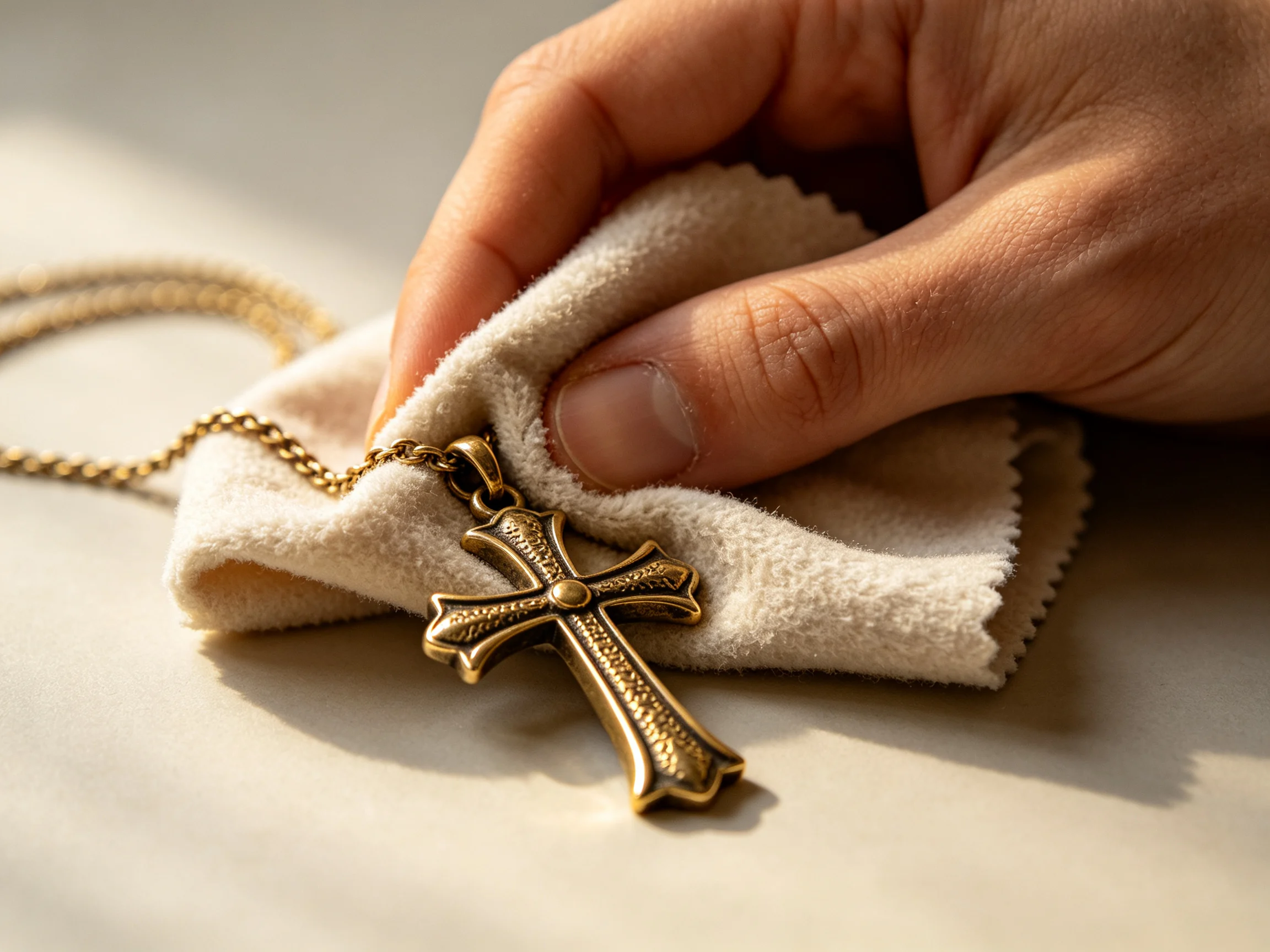
- Remove ordinary skin oils with a clean microfiber cloth.
- Use mild soap only when the material description allows it.
- Avoid soaking mixed-material, plated, glued, wooden, or oxidized pieces.
- Return each item to a dry compartment or pouch after wear.
When material information is incomplete, begin with a dry cloth and avoid ultrasonic machines, abrasive pastes, and long soaking.
Common Buying and Wearing Errors
- Buying from an enlarged image: Close-ups can hide true scale and weight.
- Confusing color with composition: Gold-tone and silver-tone do not identify the base material.
- Ignoring routine: Delicate construction may not fit sports, travel, manual work, or water exposure.
- Overstyling the symbol: Too many competing pendants can make the cross visually disappear.
- Using the wrong cleaner: One harsh method can remove plating, flatten oxidation, loosen stones, or damage wood.
FAQ
Does Orthodox cross jewelry have one fixed meaning?
Not always. Historic forms have documented contexts, while devotional and personal interpretations can vary across communities. Use careful sources and respect the wearer’s tradition.
Can Orthodox cross jewelry be worn every day?
Orthodox cross jewelry can suit daily wear when the piece is comfortable, secure, and made for the wearer’s routine. Delicate finishes still need reasonable removal and care.
Is Orthodox cross jewelry a meaningful gift?
Yes. It can express Christian faith within Eastern Orthodox traditions, with design details that may carry liturgical and cultural significance. Choose according to the recipient’s own beliefs, style, size, and willingness to care for the material.
Can Orthodox cross jewelry be worn by someone outside the tradition?
That depends on context and intention. Learn what the symbol represents, avoid using organization-specific emblems casually, and prioritize respect over novelty.
How can I recognize good-quality Orthodox cross jewelry?
Look for named materials, consistent measurements, smooth finishing, reliable closures, secure stones or cords, realistic durability claims, and accessible customer support.
Choose for the Person Who Will Wear It
The best Orthodox cross jewelry is not automatically the most expensive, largest, or most decorative option. It is the piece that balances symbolism with construction and comfort.
The symbol already carries emotional weight. Good design lets that meaning remain visible without making the piece uncomfortable or difficult to maintain.