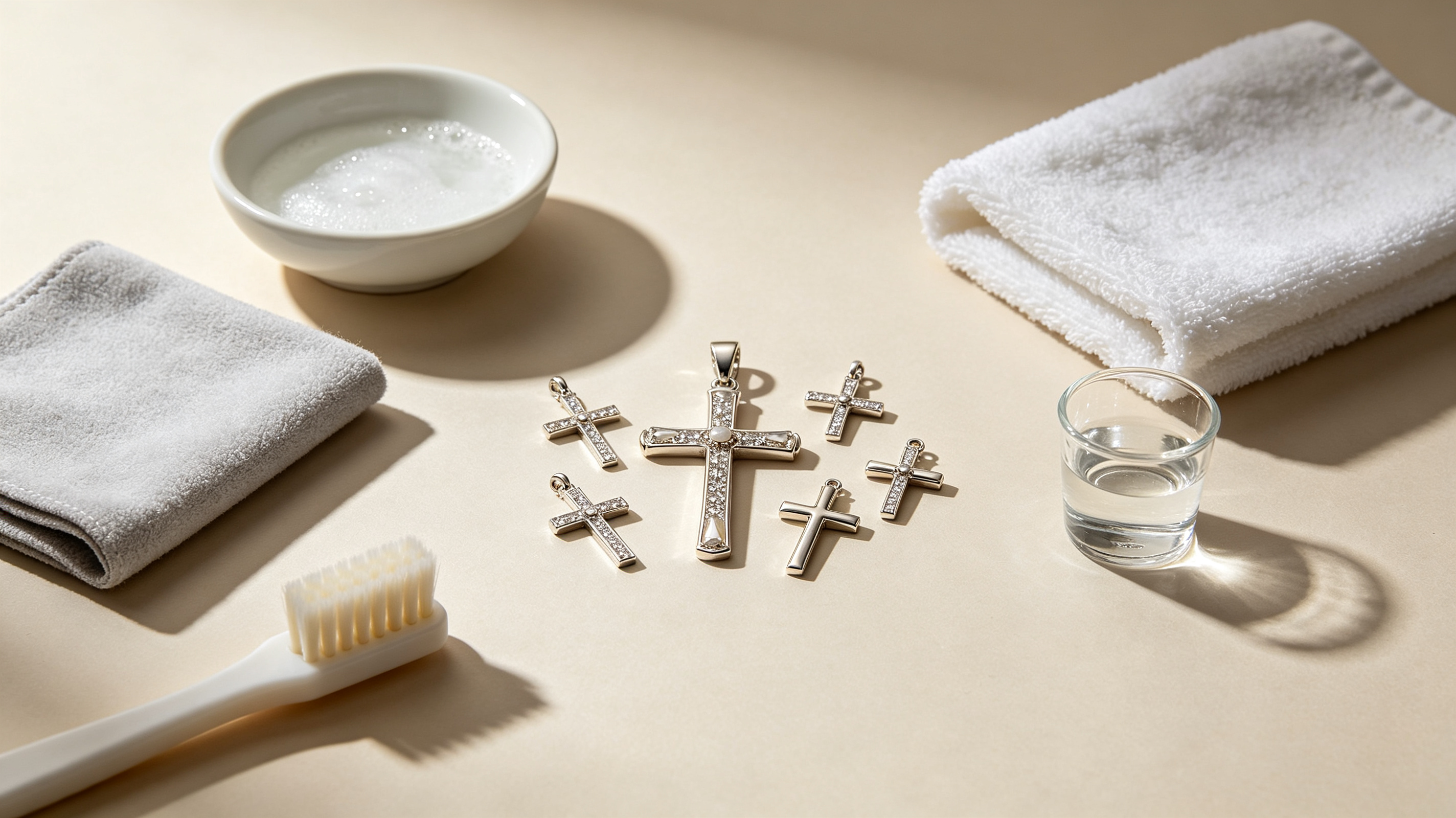
How to clean cross jewelry works best when personal meaning is supported by comfortable proportions and clearly disclosed materials.
Common versions include metal pendants, stone-set crosses, wooden crosses, rings, and bracelets and earrings. Each changes how visible the cross feels and how naturally it fits into a daily wardrobe.
Use the sections below to compare materials, proportions, comfort, symbolic context, and seller transparency before making a decision.
What This Jewelry Category Includes
The term how to clean cross jewelry can cover more than a single product type. It includes designs such as metal pendants, stone-set crosses, wooden crosses, rings, and bracelets and earrings and may range from private devotional pieces to visible fashion jewelry.
The category includes both fashion jewelry and long-term keepsakes. The difference is usually found in material disclosure, finishing, repairability, and the precision of small components.
One Cleaning Method Does Not Fit Every Piece
When a piece combines several materials, use the gentlest method that can remove ordinary surface residue without soaking or abrasion.
If the finish is intentionally oxidized or textured, aggressive polishing may erase the visual character rather than improve it.
How Material Changes the Experience
The base material matters more than the marketing name. It determines how the piece responds to sweat, water, friction, and polishing.
- Stainless Steel: Verify whether this describes the entire piece, a surface finish, or only one component.
- Sterling Silver: Verify whether this describes the entire piece, a surface finish, or only one component.
- Gold: Verify whether this describes the entire piece, a surface finish, or only one component.
- Plated Metal: Verify whether this describes the entire piece, a surface finish, or only one component.
- Wood: Verify whether this describes the entire piece, a surface finish, or only one component.
Solid, plated, filled, vermeil, stainless steel, sterling silver, and natural wood are not interchangeable descriptions. Each should be stated plainly.
How to Protect the Finish and Construction
- Apply fragrance, lotion, sunscreen, and hair products before putting on the jewelry.
- Wipe the piece with a soft dry cloth after heavy wear.
- Use only a cleaner that is safe for the exact material and finish.
- Dry links, clasps, settings, and cords fully before storage.
- Store pieces separately to limit scratches and tangles.
The safest method is determined by the most delicate component. A strong chain does not make a glued stone, plated pendant, wooden inlay, or leather cord equally water resistant.
A Practical Construction Checklist
- Front and back views: The reverse and attachment points should be visible, not only the polished front.
- Consistent specifications: Material and measurements should agree across title, description, and variation options.
- Balanced proportion: Chain, pendant, band, or earring findings should look structurally compatible.
- Realistic claims: Durability and water resistance should be explained with limits.
- Support after purchase: Return, repair, and contact information should be accessible.
Original photographs and clear return terms make comparison easier because they reveal scale and show whether the seller stands behind the description.
When the Piece Becomes Part of a Routine
How to clean cross jewelry can work for everyday wear when the piece is smooth, secure, and suited to the wearer’s routine. Moderate weight and low-profile construction are usually more useful than extra ornament.
Low-maintenance does not mean indestructible. Clasps, plating, stones, cords, and wood may have different limits even when the main metal is durable.
When the Piece Is Chosen for Someone Else
The cross already carries emotional weight, so the design does not need to be oversized to feel special. Comfort and familiarity often make a gift more meaningful over time.
Adjustable fit, clear care guidance, secure packaging, and a reasonable return window are practical parts of a thoughtful present.
Use the complete jewelry care guide to compare measurements, materials, and the overall design direction before choosing.
What to Avoid
- Buying from an enlarged image: Close-ups can hide true scale and weight.
- Confusing color with composition: Gold-tone and silver-tone do not identify the base material.
- Ignoring routine: Delicate construction may not fit sports, travel, manual work, or water exposure.
- Overstyling the symbol: Too many competing pendants can make the cross visually disappear.
- Using the wrong cleaner: One harsh method can remove plating, flatten oxidation, loosen stones, or damage wood.
FAQ
How should how to clean cross jewelry be stored?
Keep it dry and separate from harder pieces. Untangle chains, use padded ring slots, secure earring pairs, and protect wood, plating, and stones from friction.
How can I recognize good-quality how to clean cross jewelry?
Look for named materials, consistent measurements, smooth finishing, reliable closures, secure stones or cords, realistic durability claims, and accessible customer support.
What is the safest first step for how to clean cross jewelry?
Identify the material and wipe the piece with a clean soft cloth. Avoid liquid cleaners until you know the finish, stone setting, and mixed-material limits.
Can how to clean cross jewelry be worn every day?
How to clean cross jewelry can suit daily wear when the piece is comfortable, secure, and made for the wearer’s routine. Delicate finishes still need reasonable removal and care.
Can damaged how to clean cross jewelry be repaired?
Many clasps, chains, settings, and precious-metal parts can be repaired. Plating, cracked wood, worn cord, or missing fashion stones may require replacement rather than restoration.
Choosing How to clean cross jewelry With Confidence
The best how to clean cross jewelry is not automatically the most expensive, largest, or most decorative option. It is the piece that balances symbolism with construction and comfort.
Choose slowly enough to verify the facts, but do not confuse complexity with quality. Clear materials, balanced proportions, and realistic care are often the strongest signs.