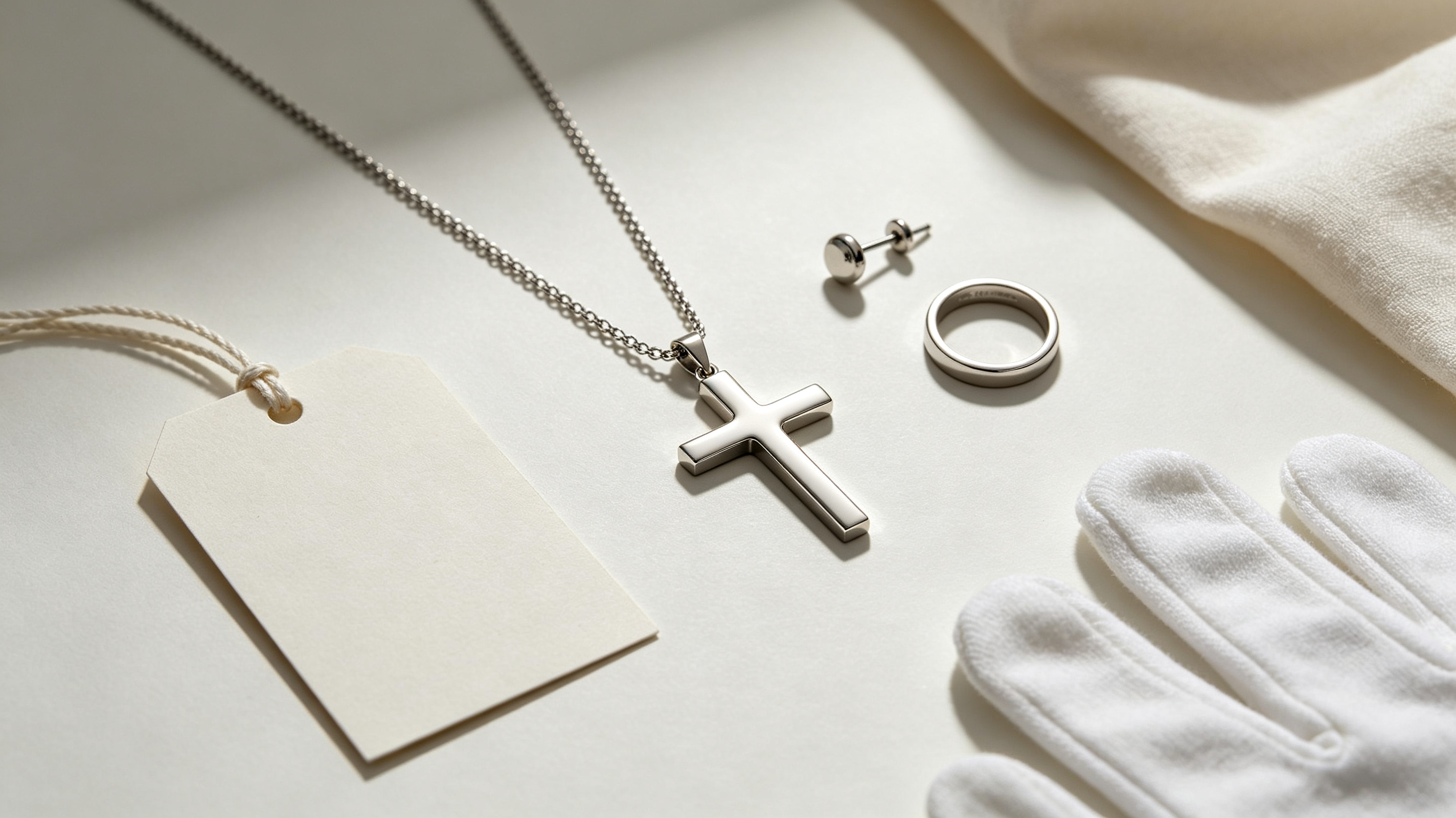
Cross jewelry for sensitive skin becomes more useful when the buyer looks beyond the symbol and studies how the piece is actually made and worn.
This topic includes smooth pendants, nickel-conscious chains, titanium earrings, solid-gold rings, and stainless steel bracelets. Depending on the wearer, those forms can communicate meaningful jewelry selected with careful attention to metal composition and skin comfort.
Rather than treating the cross as a trend label, this guide examines nickel content, plating wear, post material, sweat exposure, and patch testing so the final choice feels intentional in ordinary life.
What This Jewelry Category Includes
The term cross jewelry for sensitive skin can cover more than a single product type. It includes designs such as smooth pendants, nickel-conscious chains, titanium earrings, solid-gold rings, and stainless steel bracelets and may range from private devotional pieces to visible fashion jewelry.
A useful listing should identify the base material, finish, dimensions, closure, weight, and care limits. Color alone does not reveal how the piece is constructed.
Understanding What You Are Paying For
Read the construction from the base outward: core material, surface layer, stone or accent, and final protective finish. Each layer affects wear and repairability.
A clearly disclosed plated piece can be a sensible purchase when the buyer understands its limits. Higher price is justified only when material and construction support it.
Comfort Checks That Product Photos Cannot Show
Fit includes more than chain length or ring size. Weight, edge shape, clasp placement, movement, and contact with clothing all affect whether a piece is worn often.
- Nickel Content: Consider how this behaves after several hours, not only when first tried on.
- Plating Wear: Consider how this behaves after several hours, not only when first tried on.
- Post Material: Consider how this behaves after several hours, not only when first tried on.
- Sweat Exposure: Consider how this behaves after several hours, not only when first tried on.
- Patch Testing: Consider how this behaves after several hours, not only when first tried on.
When exact preferences are unknown, moderate size and adjustable fit are safer than an unusually short, heavy, or rigid design.
Choosing a Material That Fits the Routine
Jewelry color is only the surface impression. Buyers should identify what lies beneath the finish and whether that construction fits the intended wear frequency.
- Implant-Grade Titanium: Ask how it should be cleaned and what kinds of moisture or chemicals should be avoided.
- High-Quality Stainless Steel: Ask how it should be cleaned and what kinds of moisture or chemicals should be avoided.
- Solid Gold: Ask how it should be cleaned and what kinds of moisture or chemicals should be avoided.
- Platinum: Ask how it should be cleaned and what kinds of moisture or chemicals should be avoided.
- Sterling Silver With Known Alloy Content: Ask how it should be cleaned and what kinds of moisture or chemicals should be avoided.
Terms such as gold-tone, silver-tone, and luxury alloy describe appearance more than composition. Exact wording creates better expectations.
Design Directions to Compare
Before comparing price, decide which design direction is realistic for the wearer:
- Smooth Pendants: Look at the practical construction rather than judging only the front-facing photograph.
- Nickel-Conscious Chains: Look at the practical construction rather than judging only the front-facing photograph.
- Titanium Earrings: Look at the practical construction rather than judging only the front-facing photograph.
- Solid-Gold Rings: Look at the practical construction rather than judging only the front-facing photograph.
- Stainless Steel Bracelets: Look at the practical construction rather than judging only the front-facing photograph.
The best proportion is the one that remains recognizable without pulling, snagging, or overwhelming the outfit.
Everyday Wear: What Changes After the First Week
Cross jewelry for sensitive skin can work for everyday wear when the piece is smooth, secure, and suited to the wearer’s routine. Moderate weight and low-profile construction are usually more useful than extra ornament.
Even durable jewelry meets sweat, lotion, fragrance, fabric friction, and occasional impact. Regular wiping and sensible removal before swimming, showering, sleep, or strenuous activity can extend its useful life.
How to Wear the Piece Naturally
Styling works best when the scale of the jewelry and the visual weight of the outfit support each other.
- Daily Wear: Match chain, scale, or finish to the texture and formality of the clothing.
- Earrings: Match chain, scale, or finish to the texture and formality of the clothing.
- Close-Fitting Chains: Match chain, scale, or finish to the texture and formality of the clothing.
- Rings: Match chain, scale, or finish to the texture and formality of the clothing.
- Bracelets: Match chain, scale, or finish to the texture and formality of the clothing.
Mixed metals can work when both tones are repeated deliberately. Randomly adding a single conflicting finish is more likely to look accidental.
When the Piece Is Chosen for Someone Else
A symbolic gift should begin with the recipient rather than the occasion. Notice what they wear repeatedly, what metals they avoid, and whether they prefer private or visible expressions of faith.
If exact style is uncertain, a moderate design is safer than an extreme statement piece. Personal meaning can come from the message and occasion rather than scale alone.
Use the ask CrossMira about materials to compare measurements, materials, and the overall design direction before choosing.
Care and Storage
- Apply fragrance, lotion, sunscreen, and hair products before putting on the jewelry.
- Wipe the piece with a soft dry cloth after heavy wear.
- Use only a cleaner that is safe for the exact material and finish.
- Dry links, clasps, settings, and cords fully before storage.
- Store pieces separately to limit scratches and tangles.
The safest method is determined by the most delicate component. A strong chain does not make a glued stone, plated pendant, wooden inlay, or leather cord equally water resistant.
Details Worth Inspecting Closely
- Specific material: The base metal, plating, stone, wood, or textile is named.
- Useful measurements: Dimensions, weight, length, circumference, or ring size are provided.
- Clean finishing: Edges, bails, posts, solder points, and clasps appear smooth and aligned.
- Secure assembly: Jump rings, stones, cords, hinges, and closures do not rely on weak connections.
- Care limits: The seller explains moisture, chemical, storage, and cleaning requirements.
A meaningful product page should help the buyer make a calm decision rather than hide practical limits behind emotional language.
Common Buying and Wearing Errors
- Skipping measurements: The word “medium” does not guarantee a familiar size.
- Choosing for the occasion only: A gift still needs to work after the celebration ends.
- Assuming all crosses mean the same thing: Form and tradition can change context.
- Leaving pieces wet: Moisture and residue can collect around links, settings, and cords.
- Storing everything together: Chains, stones, and hard metal edges can scratch one another.
FAQ
Is cross jewelry for sensitive skin a meaningful gift?
Yes. It can express meaningful jewelry selected with careful attention to metal composition and skin comfort. Choose according to the recipient’s own beliefs, style, size, and willingness to care for the material.
How should cross jewelry for sensitive skin be cleaned?
Use a method approved for the exact construction. Begin with a soft cloth, avoid harsh chemicals, and do not soak plated, glued, wooden, or mixed-material pieces.
How can I recognize good-quality cross jewelry for sensitive skin?
Look for named materials, consistent measurements, smooth finishing, reliable closures, secure stones or cords, realistic durability claims, and accessible customer support.
What material details matter most for cross jewelry for sensitive skin?
Identify the base material, surface finish, hallmark where relevant, stone or accent material, weight, and whether worn surfaces can be repaired or replated.
Can cross jewelry for sensitive skin be worn every day?
Cross jewelry for sensitive skin can suit daily wear when the piece is comfortable, secure, and made for the wearer’s routine. Delicate finishes still need reasonable removal and care.
Choose for the Person Who Will Wear It
When cross jewelry for sensitive skin is chosen carefully, the jewelry can move beyond a one-day purchase and become part of a daily or milestone routine.
The symbol already carries emotional weight. Good design lets that meaning remain visible without making the piece uncomfortable or difficult to maintain.