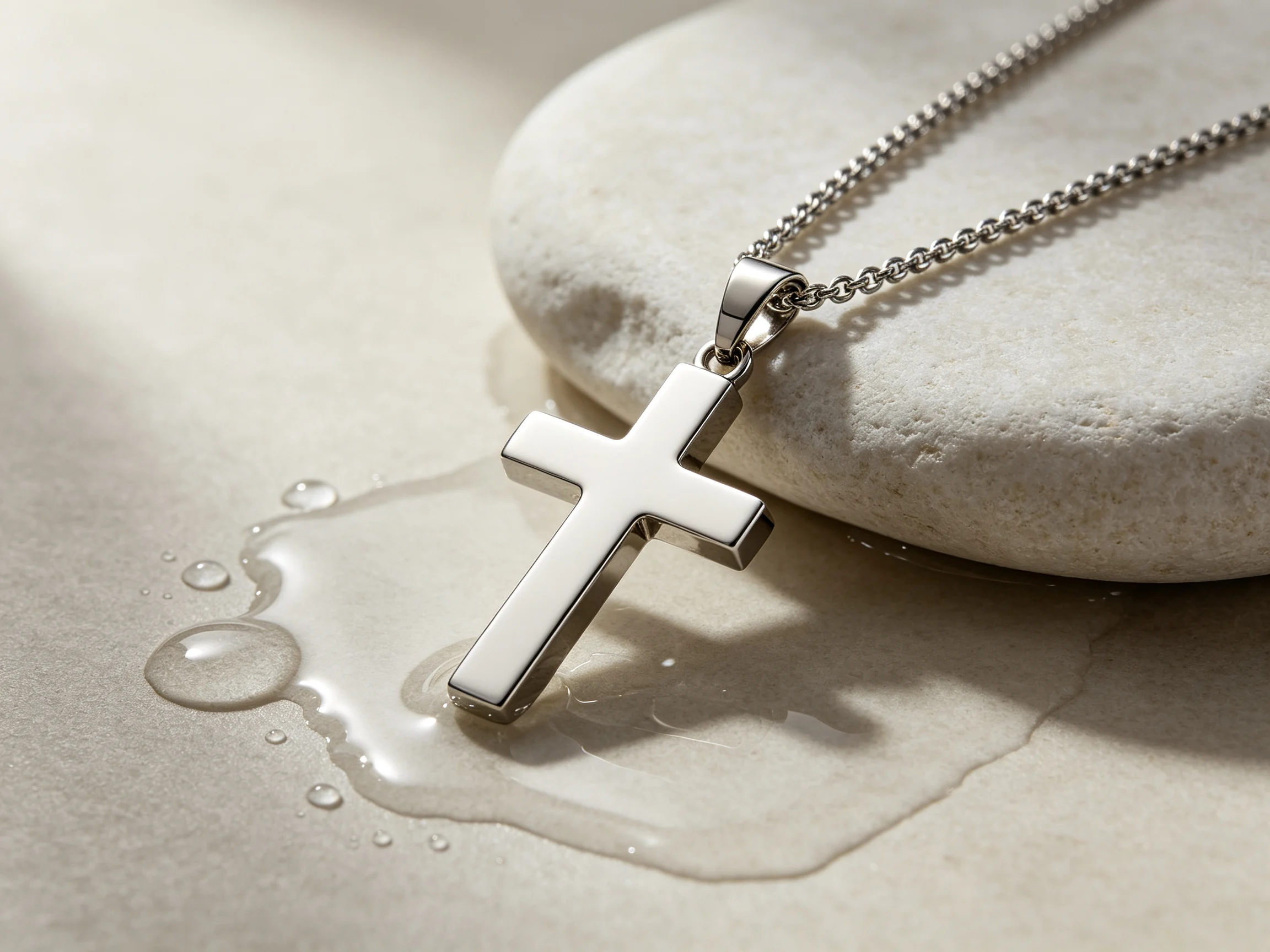
Waterproof Cross Necklace: How to Choose One for Everyday Wear
A waterproof cross necklace sounds simple: a meaningful pendant you can wear without worrying about rain, sweat, hand washing, travel, or a busy daily routine. In real life, the choice is a little more careful. Not every necklace described as waterproof handles water the same way, and not every cross pendant is made for constant exposure to moisture.
The right necklace should feel meaningful, comfortable, and durable enough for regular wear. The cross may represent faith, protection, remembrance, gratitude, or personal strength, but the material and construction decide how well it fits daily life. A beautiful pendant is less useful if it tarnishes quickly, irritates the skin, traps residue, or needs more care than the wearer wants to give.
This guide explains what to look for in a waterproof cross necklace, how waterproof and water-resistant jewelry differ, which materials are more practical, what habits to avoid, and how to keep a cross necklace looking clean for longer.
What Is a Waterproof Cross Necklace?
A waterproof cross necklace is a cross pendant necklace designed to handle regular contact with water better than delicate fashion jewelry. It may be worn during light rain, hand washing, sweat, humid weather, or occasional accidental splashes without immediately losing its appearance.
However, waterproof does not always mean the necklace should be worn in every water situation without care. Hot showers, chlorine, salt water, soap, shampoo, perfume, lotion, and harsh cleaning products can all affect jewelry over time. The chain, clasp, plating, stones, cord, and pendant finish may each react differently.
This is why material matters. A necklace made with durable metal and simple construction will usually handle daily moisture better than a plated, glued, painted, leather, wood, or stone-accented design. The more complex the necklace is, the more carefully it should be treated around water.
Waterproof vs Water Resistant Necklace: What Is the Difference?
The difference between waterproof and water resistant jewelry is important. Waterproof suggests a piece can handle water exposure more confidently, while water resistant usually means it can tolerate some moisture but should not be soaked or exposed constantly.
In jewelry, these terms are not always used with strict technical standards. A seller may use waterproof to describe a durable everyday necklace, but that does not mean every part of the piece is immune to damage. A chain might handle water well, while a plated finish, adhesive, stone setting, or cord detail may not.
A practical way to think about it is simple: water resistant jewelry can survive normal life, while truly low-maintenance water-friendly jewelry should have fewer delicate components. If you plan to wear a cross necklace often, choose the strongest material you can and still build good care habits.
Can You Shower With a Cross Necklace?
You can sometimes shower with a cross necklace if it is made from a durable water-friendly material, but removing it before showering is still the safer habit. Shower water is not just water. It often includes soap, shampoo, conditioner, body wash, hard water minerals, heat, and repeated friction.
These factors can slowly affect the finish, clasp, stones, plating, or chain surface. Even if the necklace does not show damage immediately, repeated shower exposure may make it look dull faster. If the necklace has wood, leather, cord, pearls, glued stones, plating, or dark oxidized details, showering with it is not recommended.
If you want a necklace for daily wear, choose one that can handle occasional water exposure. But if you want it to stay cleaner and better-looking for longer, take it off before long showers, swimming, hot tubs, or ocean water.
Best Materials for a Waterproof Cross Necklace
The best material for a waterproof cross necklace is usually one that resists tarnish, handles moisture well, and does not require complicated care. Material choice affects durability, comfort, appearance, and long-term maintenance.
Stainless Steel
Stainless steel is one of the most practical choices for a water-resistant cross necklace. It is strong, relatively low maintenance, and works well for everyday jewelry. A stainless steel cross pendant can suit people who want a clean silver-tone look without treating the necklace like a fragile piece.
Titanium
Titanium is lightweight, strong, and often used in jewelry for people who want comfort and durability. It can be a good option for low-maintenance daily wear, although available cross necklace styles may be more limited than stainless steel.
Solid Gold
Solid gold can handle moisture better than many plated designs, but it is much more expensive. It may be appropriate for fine jewelry or long-term keepsake pieces. However, the chain design, clasp, and any stones still need proper care.
Sterling Silver
Sterling silver is beautiful and traditional, but it can tarnish over time and may require polishing. It is not usually the easiest choice for people who want a low-maintenance necklace around water, sweat, and frequent wear.
Plated Jewelry
Plated necklaces can look attractive, but the surface layer may wear with friction, water, sweat, and chemicals. If you want a necklace that can handle frequent moisture, plating quality and care habits become very important.
Why Stainless Steel Is Practical for Daily Cross Necklaces
Stainless steel is practical for daily cross necklaces because it offers a strong balance of durability, clean appearance, and easy care. It is especially useful for people who want a necklace they can wear often without worrying too much about ordinary daily contact with moisture.
A stainless steel cross necklace can work well with T-shirts, hoodies, jackets, workwear, casual shirts, and travel outfits. It can feel modern, simple, masculine, minimal, or bold depending on the chain and pendant shape.
That said, stainless steel does not mean careless wear is ideal. Sweat, sunscreen, perfume, chlorine, salt water, and soap can still leave residue. Regular wiping and occasional gentle cleaning help keep the necklace comfortable and clean. Low maintenance does not mean no maintenance.
If you are looking for an everyday option, a stainless steel cross necklace can be a practical reference point because it combines a durable material with a cross pendant designed for regular styling.
What to Avoid if You Want a Water-Friendly Cross Necklace
If you want a water-friendly cross necklace, avoid designs that depend on delicate finishes, absorbent materials, weak coatings, or fragile construction. Some styles are beautiful but not ideal for regular water exposure.
- Leather cords: Leather can weaken, dry, stretch, or change texture when repeatedly exposed to water.
- Wood pendants: Wood can absorb moisture and should be kept away from soaking water.
- Thin plating: Plated finishes may wear faster with sweat, friction, soap, or chlorine.
- Glued stones: Water and heat may weaken adhesives over time.
- Heavy oxidized finishes: Rough cleaning or frequent water exposure may change the intended dark details.
- Weak clasps: A necklace worn daily needs a clasp that feels secure and easy to use.
This does not mean you should never buy these styles. It means you should match the necklace to the way you plan to wear it. A wooden or leather cross necklace may be meaningful and beautiful, but it should be treated differently from stainless steel.
How to Choose a Waterproof Cross Necklace for Men
A waterproof cross necklace for men should feel durable, comfortable, and proportional. Many men prefer a necklace that can handle daily wear without looking too delicate or needing constant care.
Stainless steel is often a practical choice. Chain thickness also matters. A very thin chain may not match a medium or large cross pendant, while a heavy chain may feel too noticeable for someone who prefers minimal jewelry. A medium chain with a balanced pendant is usually the safest everyday option.
Chain length should match the wearer’s clothing. A 20 to 22 inch chain often works well with T-shirts and casual shirts, while a longer chain may suit hoodies or larger pendants. The best choice should feel natural with the wearer’s real wardrobe.
How to Choose a Waterproof Cross Necklace for Women
A waterproof cross necklace for women should balance durability with elegance. The most wearable designs are often simple, smooth, and easy to layer with other pieces.
A smaller or medium cross pendant can work well for daily wear. Silver-tone stainless steel may feel clean and modern, while gold-tone options can look warmer and dressier if the finish is durable enough. If the necklace includes stones, make sure the setting feels secure and avoid unnecessary water exposure.
For chain length, 16 to 20 inches often works well for smaller cross pendants, depending on neckline and style. An adjustable chain is useful because it allows the wearer to match the necklace with T-shirts, blouses, sweaters, dresses, and layered looks.
Is a Waterproof Cross Necklace a Good Gift?
A waterproof cross necklace can be a good gift because it combines meaning with practicality. It can suit birthdays, graduations, confirmations, Father’s Day, Mother’s Day, Christmas, anniversaries, travel gifts, or personal encouragement gifts.
It is especially useful for someone who wears jewelry often or does not want high-maintenance accessories. A meaningful necklace becomes more valuable when the recipient can actually wear it in daily life without worrying about every small splash or humid day.
Before choosing one as a gift, consider the recipient’s style. Do they prefer silver-tone or gold-tone jewelry? Do they wear bold accessories or subtle pieces? Do they need something for work, travel, church, casual outfits, or everyday faith expression? Practicality should support meaning, not replace it.
How to Care for a Waterproof Cross Necklace
A waterproof cross necklace still needs basic care. Good habits help prevent dullness, residue buildup, scratches, and unnecessary wear.
- Wipe the necklace with a soft cloth after heavy wear or sweating.
- Rinse gently with clean water if it has been exposed to salt, chlorine, or heavy residue.
- Use mild soap and warm water for occasional cleaning.
- Dry the chain, clasp, and pendant fully before storing.
- Store it separately to avoid scratches and tangling.
- Avoid harsh chemicals, abrasive tools, and rough polishing.
If the necklace has plating, stones, wood, leather, cord, or special finishes, use extra care. The safest approach is to treat even water-friendly jewelry with respect. A few seconds of care can help the necklace look better for much longer.
Common Mistakes to Avoid
Most mistakes happen when buyers assume waterproof means indestructible. A necklace can be durable and still need reasonable care.
- Wearing it in every water situation: Pools, hot tubs, and ocean water are harder on jewelry than normal daily moisture.
- Ignoring soap and chemicals: Shower products, perfume, sunscreen, and cleaning products can affect finish and buildup.
- Choosing style over material: A beautiful necklace may not be the best daily water-friendly choice.
- Forgetting the clasp: A durable pendant still needs a secure chain and clasp.
- Not drying it properly: Moisture left around chain links or stone settings can create residue over time.
- Over-polishing special finishes: Oxidized, textured, or plated details should be cleaned gently.
FAQ
Can you shower with a cross necklace?
You can sometimes shower with a durable cross necklace, especially if it is made from stainless steel, but removing it before showering is still safer. Soap, shampoo, heat, and minerals can affect jewelry over time.
Is stainless steel good for a waterproof cross necklace?
Yes, stainless steel is a practical choice for a water-resistant cross necklace because it is durable, low maintenance, and suitable for everyday wear. It still benefits from regular wiping and gentle cleaning.
Does a waterproof cross necklace tarnish?
A good water-friendly necklace should resist tarnish better than delicate fashion jewelry, but residue, chemicals, sweat, and poor storage can still affect its appearance. Material and care habits matter.
What material is best for a water resistant necklace?
Stainless steel is one of the most practical materials for water-resistant everyday jewelry. Titanium and solid gold can also work well, while plated jewelry, wood, leather, and some stones require more careful handling.
How do you clean a waterproof cross necklace?
Wipe it with a soft cloth after wear. For deeper cleaning, use mild soap and warm water, then dry the chain, clasp, and pendant fully before storing it.
Choosing a Cross Necklace That Can Keep Up With Daily Life
The best waterproof cross necklace is not just the one that sounds strongest in a product description. It is the one that matches your real routine, your style, and the level of care you are willing to give. A durable necklace should make daily wear easier, not make you careless with a meaningful piece.
Before choosing, look at the material, chain, clasp, pendant finish, stones, and care instructions. If you want a cross necklace for everyday wear, choose a design that can handle ordinary moisture but still treat it with respect. When the material and habits are right, the necklace can stay meaningful, comfortable, and ready for daily life.