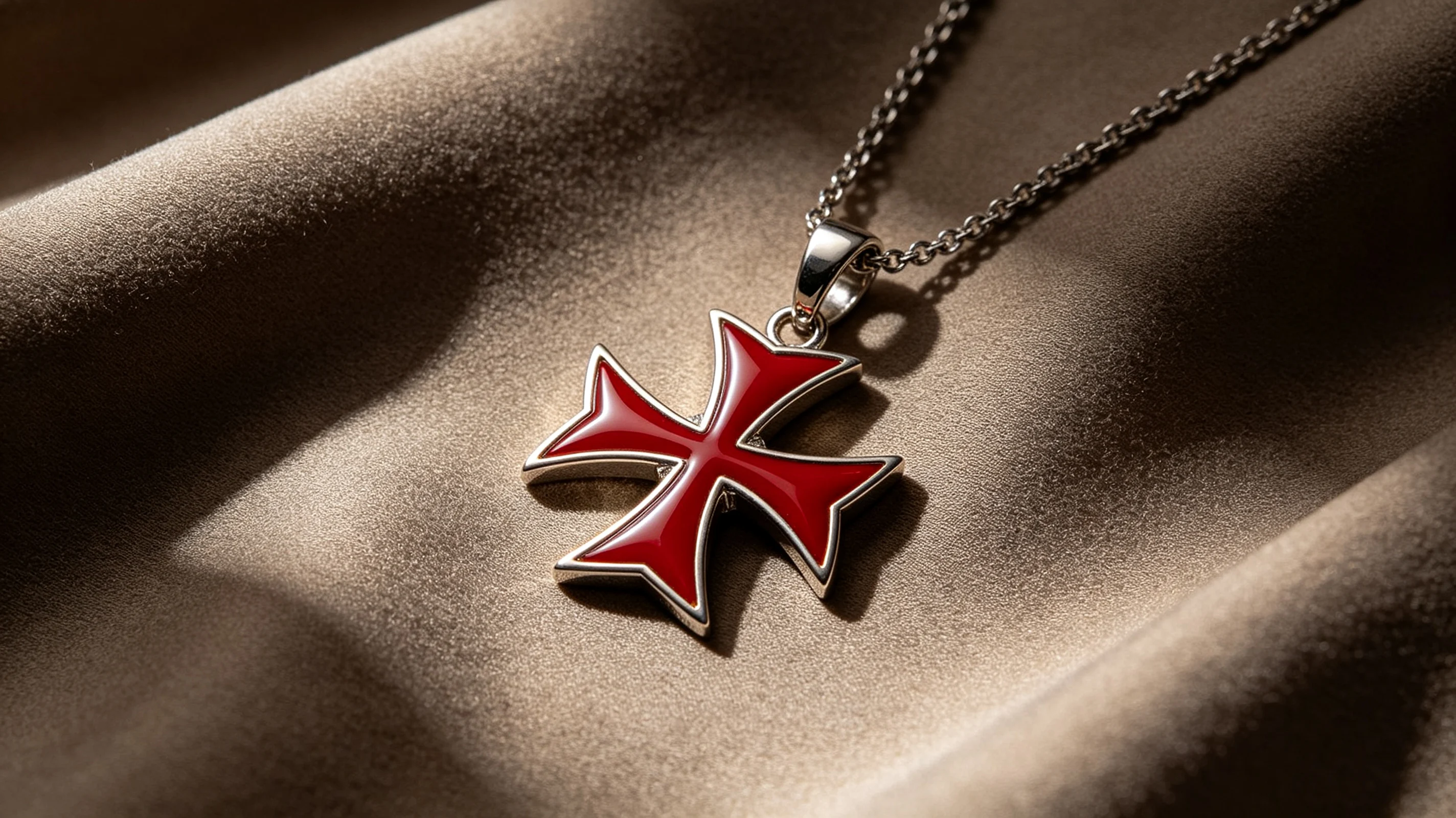
Maltese cross jewelry is not one fixed look. It can be quiet and private, visible and expressive, traditional, modern, or somewhere between those directions.
Within this category, buyers may encounter eight-point pendants, signet rings, enamel badges, cufflinks, and minimal geometric interpretations. The variety is useful, but it also makes measurements and material details more important.
The most useful buying questions are whether eight-point geometry is appropriate, whether organizational emblems is clearly explained, and whether the piece suits heritage outfits as well as special occasions.
Understanding Maltese cross jewelry
Maltese cross jewelry describes pieces in which the cross is the main pendant, shape, engraving, or structural detail. It may appear as eight-point pendants, signet rings, enamel badges, cufflinks, and minimal geometric interpretations.
A useful listing should identify the base material, finish, dimensions, closure, weight, and care limits. Color alone does not reveal how the piece is constructed.
Historical and Cultural Context
The eight-pointed cross became closely associated with the Order of St. John and later Malta. In the Order of Malta tradition, the eight points are linked with the Beatitudes and virtues of service.
Modern versions may change proportion, ornament, or materials. Those changes do not automatically make a piece disrespectful, but buyers should know whether they are purchasing a traditional form or a contemporary adaptation.
Faith, Memory, and Personal Intention
This jewelry may express service, courage, charity, historical identity, and association with the Order of St. John. The shared symbol provides a starting point, while the wearer’s experience gives it a more private significance.
When buying for another person, ask what the symbol means to them instead of assigning a message on their behalf. Respect is more important than choosing the most elaborate design.
Traditional Form or Modern Interpretation?
Look for descriptions that acknowledge variation rather than claiming one universal meaning. Careful language is usually a better sign than exaggerated certainty.
For gifts, confirm that the wearer is comfortable with the specific symbol and not only with cross jewelry in general.
Design Directions to Compare
Each version creates a different balance between symbolism and styling:
- Eight-Point Pendants: Check scale, attachment points, and whether the design remains comfortable during movement.
- Signet Rings: Check scale, attachment points, and whether the design remains comfortable during movement.
- Enamel Badges: Check scale, attachment points, and whether the design remains comfortable during movement.
- Cufflinks: Check scale, attachment points, and whether the design remains comfortable during movement.
- Minimal Geometric Interpretations: Check scale, attachment points, and whether the design remains comfortable during movement.
The best proportion is the one that remains recognizable without pulling, snagging, or overwhelming the outfit.
Choosing a Material That Fits the Routine
Material affects weight, color stability, skin contact, price, and the safest cleaning method. Similar photographs do not guarantee similar performance.
- Silver: Look for a specific composition instead of a vague color or “premium” label.
- Gold: Look for a specific composition instead of a vague color or “premium” label.
- Stainless Steel: Look for a specific composition instead of a vague color or “premium” label.
- Enamel: Look for a specific composition instead of a vague color or “premium” label.
- Bronze-Tone Metal: Look for a specific composition instead of a vague color or “premium” label.
Solid, plated, filled, vermeil, stainless steel, sterling silver, and natural wood are not interchangeable descriptions. Each should be stated plainly.
How to Judge Proportion Before Ordering
Words such as small, medium, and statement are inconsistent between sellers. Millimeters, inches, grams, and circumference are much more useful.
- Eight-Point Geometry: This detail has a direct effect on movement, balance, and long-term use.
- Organizational Emblems: This detail has a direct effect on movement, balance, and long-term use.
- Historical Claims: This detail has a direct effect on movement, balance, and long-term use.
- Enamel Quality: This detail has a direct effect on movement, balance, and long-term use.
- Wearing Context: This detail has a direct effect on movement, balance, and long-term use.
A few minutes spent comparing measurements can prevent most returns caused by scale and comfort.
Make the Jewelry Part of the Wardrobe
Give the cross enough contrast to be visible, but avoid surrounding it with so many competing details that its shape disappears.
- Heritage Outfits: Repeat one metal tone elsewhere in the outfit to create visual continuity.
- Formal Accessories: Repeat one metal tone elsewhere in the outfit to create visual continuity.
- Simple Monochrome Clothing: Repeat one metal tone elsewhere in the outfit to create visual continuity.
- Collector Jewelry: Repeat one metal tone elsewhere in the outfit to create visual continuity.
- Unisex Statement Pieces: Repeat one metal tone elsewhere in the outfit to create visual continuity.
Mixed metals can work when both tones are repeated deliberately. Randomly adding a single conflicting finish is more likely to look accidental.
When the Piece Is Chosen for Someone Else
Maltese cross jewelry can be a thoughtful gift when the symbol, material, and scale fit the recipient. The strongest gift looks believable in the person’s existing wardrobe.
If exact style is uncertain, a moderate design is safer than an extreme statement piece. Personal meaning can come from the message and occasion rather than scale alone.
Use the meaningful jewelry collection to compare measurements, materials, and the overall design direction before choosing.
Care and Storage
- Inspect the clasp, posts, stones, and attachment points before cleaning.
- Remove ordinary skin oils with a clean microfiber cloth.
- Use mild soap only when the material description allows it.
- Avoid soaking mixed-material, plated, glued, wooden, or oxidized pieces.
- Return each item to a dry compartment or pouch after wear.
Good care is usually brief and consistent. Repeated gentle maintenance is safer than occasional aggressive cleaning.
Common Buying and Wearing Errors
- Buying from an enlarged image: Close-ups can hide true scale and weight.
- Confusing color with composition: Gold-tone and silver-tone do not identify the base material.
- Ignoring routine: Delicate construction may not fit sports, travel, manual work, or water exposure.
- Overstyling the symbol: Too many competing pendants can make the cross visually disappear.
- Using the wrong cleaner: One harsh method can remove plating, flatten oxidation, loosen stones, or damage wood.
Questions Buyers Often Ask
Is Maltese cross jewelry a meaningful gift?
Yes. It can express service, courage, charity, historical identity, and association with the Order of St. John. Choose according to the recipient’s own beliefs, style, size, and willingness to care for the material.
Can Maltese cross jewelry be worn by someone outside the tradition?
That depends on context and intention. Learn what the symbol represents, avoid using organization-specific emblems casually, and prioritize respect over novelty.
How can I recognize good-quality Maltese cross jewelry?
Look for named materials, consistent measurements, smooth finishing, reliable closures, secure stones or cords, realistic durability claims, and accessible customer support.
Does Maltese cross jewelry have one fixed meaning?
Not always. Historic forms have documented contexts, while devotional and personal interpretations can vary across communities. Use careful sources and respect the wearer’s tradition.
Can Maltese cross jewelry be worn every day?
Maltese cross jewelry can suit daily wear when the piece is comfortable, secure, and made for the wearer’s routine. Delicate finishes still need reasonable removal and care.
Let Meaning and Wearability Support Each Other
A successful Maltese cross jewelry purchase feels specific to the wearer. Material, proportion, finish, and routine should support the meaning rather than compete with it.
The symbol already carries emotional weight. Good design lets that meaning remain visible without making the piece uncomfortable or difficult to maintain.