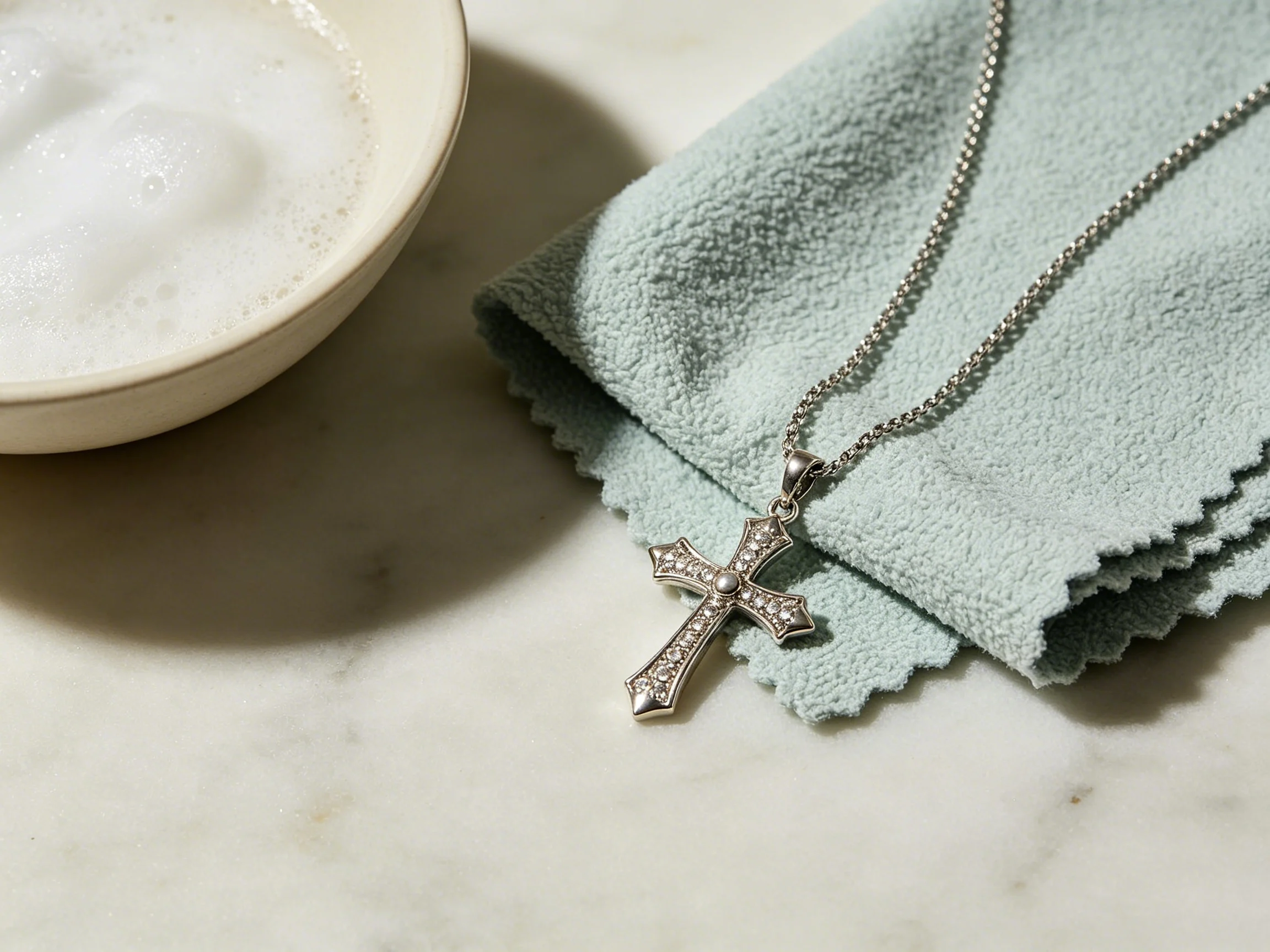
Knowing how to clean cross jewelry helps keep meaningful pieces looking good without damaging their finish. Cross necklaces and pendants often carry personal meaning, so care should be gentle, consistent, and matched to the material.
The most important rule is simple: do not clean every piece the same way. Stainless steel, silver, plated jewelry, wood, stones, leather cords, and oxidized finishes can react differently to water, cloth, soap, and polishing products.
Start With the Material
Before cleaning, identify what the jewelry is made from. A plain stainless steel cross can usually handle mild soap and water. Sterling silver may need polishing. Plated jewelry should be treated gently. Wood should not be soaked. Textured or oxidized pieces should not be aggressively polished because darker details may be part of the design.
If you are unsure, choose the gentlest method first: a soft dry cloth.
Daily Wiping
Daily wiping is the safest habit for most cross jewelry. After wearing, use a clean soft cloth to remove sweat, skin oils, dust, and residue. This is especially useful if the piece was worn during warm weather, travel, or long days.
A few seconds of wiping can reduce buildup and make deeper cleaning less frequent.
Cleaning Stainless Steel Cross Jewelry
Stainless steel is usually easy to clean. Use mild soap, warm water, and a soft cloth. Gently wipe the pendant and chain, then rinse lightly and dry completely. Do not leave moisture trapped around links or clasps.
For everyday stainless steel pieces from the CrossMira shop, simple maintenance is usually enough to keep the jewelry clean and wearable.
Cleaning Silver Cross Jewelry
Silver may tarnish over time. Use a soft silver polishing cloth when needed, and avoid harsh scrubbing. If the piece has stones, plating, or mixed materials, be careful with commercial silver cleaners because they may affect non-silver details.
Store silver in a dry place and avoid leaving it exposed to moisture for long periods.
Cleaning Plated or Gold-Tone Cross Jewelry
Plated jewelry needs gentle care. Avoid abrasive cloths, strong chemicals, and rough polishing. Use a soft dry cloth after wearing. If deeper cleaning is needed, use only a small amount of mild soap and water, then dry fully.
Frequent friction can affect plating over time, so store plated pieces separately and avoid wearing them during rough activity.
Cleaning Wooden or Corded Cross Jewelry
Wood and cords should not be soaked. Wipe wooden pendants with a dry or slightly damp cloth, then dry immediately. Avoid heavy water exposure, humid storage, and harsh cleaning products.
If the necklace has a cord, check for sweat, dust, or odor buildup. Let it dry fully before storage.
Storage Tips
- Store pieces separately: This reduces scratches and tangling.
- Keep jewelry dry: Moisture can affect finishes and cords.
- Avoid strong chemicals: Perfume, chlorine, and cleaning products can damage surfaces.
- Use a soft pouch or box: This helps protect pendants and chains.
- Close clasps before storing: This reduces tangling.
Common Cleaning Mistakes
- Using toothpaste: It can be too abrasive for many finishes.
- Soaking mixed-material jewelry: Water may damage wood, cords, or glued details.
- Over-polishing oxidized jewelry: You may remove intentional dark details.
- Storing wet jewelry: Moisture can cause dullness or damage over time.
FAQ
Can I clean cross jewelry with soap and water?
For plain stainless steel, mild soap and water are usually fine. For plated, wooden, or mixed-material pieces, use a gentler method.
How often should I clean a cross necklace?
Wipe it after heavy wear and do a deeper cleaning only when needed. Daily wiping is often enough for regular maintenance.
Can water damage cross jewelry?
Water can damage or affect some materials, especially wood, cords, plating, and certain finishes. Dry jewelry fully before storing it.
Gentle Care Keeps Meaningful Pieces Wearable
Cross jewelry does not need complicated care, but it does need the right care. Identify the material, clean gently, dry fully, and store each piece properly. A small routine can help a meaningful necklace stay comfortable and attractive for longer.